
Wedding jewellery is more than a timeless treasure – it’s a lasting symbol of eternal love. Like love itself, it flourishes with care, attention and thoughtful upkeep, so it can continue to shine as brilliantly as the day it entered your world. Read on as Melbourne Wedding & Bride’s Hannah McDonald chats with Cameron Splatt, goldsmith at Diamond Creations, to reveal insider tips for durability, maintenance and storage – keeping your wedding jewellery as radiant and untarnished as the day you said, ‘I do’.
Splatt is a part of a formidable jewellery legacy – refining his art through his family’s business for almost two decades. “I have eighteen years of experience, but my father has fifty-two. In 1990, my parents established the business in its current location with a business partner. We specialise in designing and making all types of jewellery, along with repairs and restorations,” he begins.
When it comes to his craft, Splatt is drawn to the timelessness and tradition of jewellery, finding meaning in the histories that unfold before him. “We’ve made jewellery for one client, then their children and in some cases their children too. It’s nice to have that connection that runs through whole families and it’s wonderful to be trusted by them,” he says. After witnessing countless love stories – and the jewellery that symbolises them – Splatt has come to know the care habits that keep rings radiant, and the common missteps that lead to wear and damage over time.
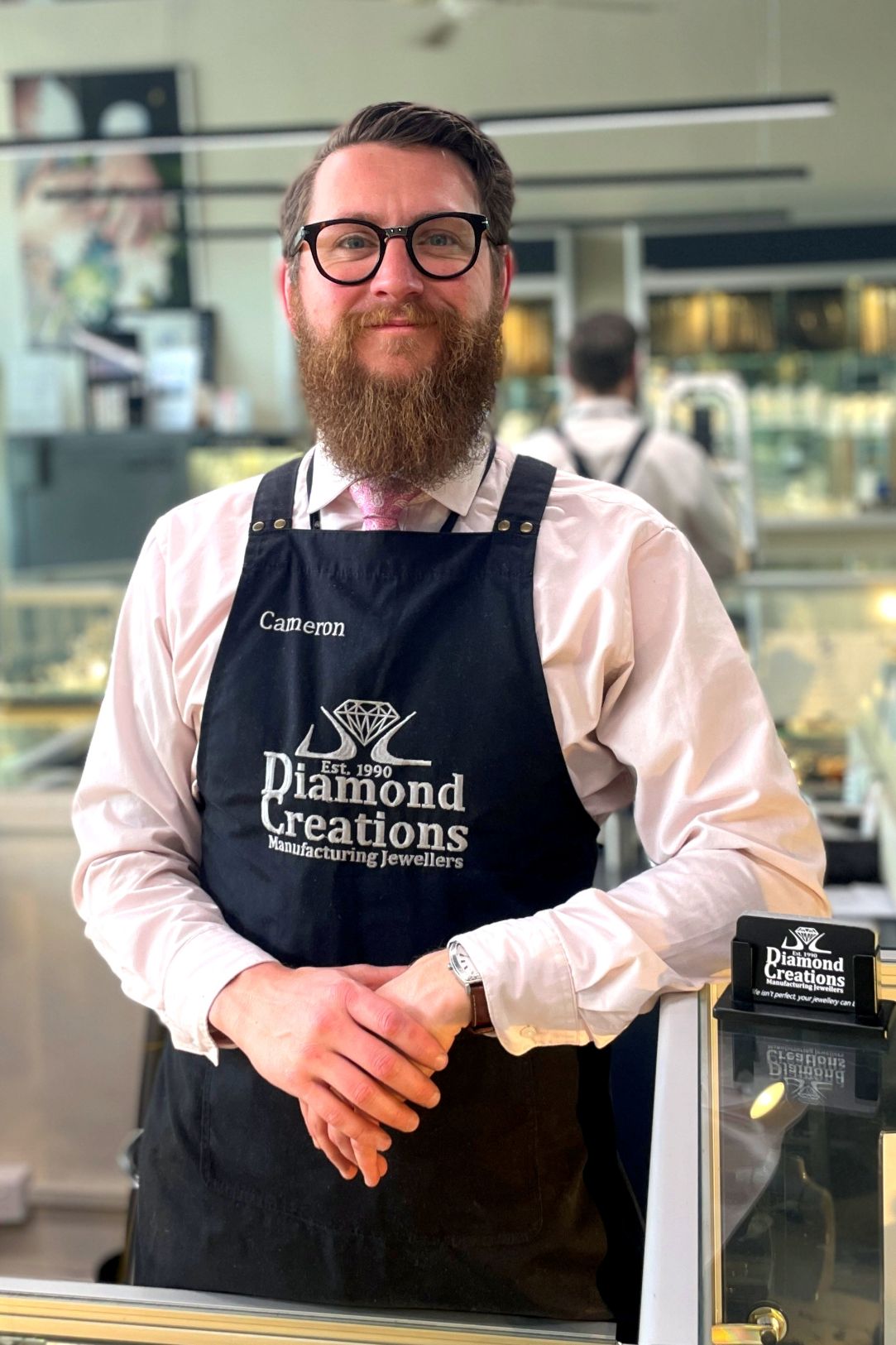
Image courtesy of Diamond Creations.
RING CARE 101
Splatt’s essential advice is simple. “I always say, ‘if you think, maybe I should take my ring off, take it off!’ Your hands go through a lot, which means your rings will go through the same thing. Gym, sports, gardening, etc. And when you take your rings off, where possible, put them in the same spot. That way you’ll remember where they are,” he suggests.
Wedding jewellery is an investment, just like any other substantial purchase you’ve made in your life. In terms of maintenance, Splatt compares it to that of a car. “Look at it the same way. You look after your car and have it inspected to keep an eye on any issues that may be coming up. The same goes with your ring. Inspections can show what might be happening to your ring as a result of wear and tear. Then I can advise the client of the timeline to address it,” he continues. “I advise to have them inspected every twelve months. When I inspect a ring, I also offer a free clean and polish if I’ve made it. That way I can inspect any damage and fix it before it compounds into a bigger issue.”
HOME BASE
To minimise the risk of any damage in the first place, proper jewellery storage is absolutely critical. “Putting them in the box they came in is a good way to keep the ring from knocks and scratches that occur when they’re sitting loose in a jewellery box,” Splatt advises. There are several options for safe keeping, like small pouches and soft pillows, but unfortunately, rings oftentimes find themselves in places they shouldn’t be. “I’ve seen rings placed in a purse, banging against coins many times. It feels like a smart place to put it and whilst it’s safe from loss the ring spends it’s time being bashed against metal coins. The metal is much stronger than gold or platinum, meaning the ring will bear the brunt of the coins. And it doesn’t take much to really damage the finish on a gold or platinum ring,” he warns.
METAL MATTERS
Just as you’ve found a partner who will stand the test of time, you need a ring to match – one that’s built to endure life’s storms, even as you cherish and protect it every step of the way. “Like with most things, if you invest in quality upfront, it will last a lot longer. Platinum is a great option lately because it used to be very expensive to make a platinum ring,” Splatt says. “Now, the price of platinum is fairly stable compared to white gold, which has risen dramatically over the last three years. Platinum has great wearability, keeps its polish and doesn’t require any sort of additional plating to make it come up brilliant, unlike white gold which requires rhodium plating.”
HANDLE WITH HEART
To truly provide your ring with the tender loving care it deserves, it’s important to know how often it will be safely stored away versus exposed to the elements of the everyday. “I always find out how often they’d be likely to have the ring on. If they want to wear it all the time, I suggest steering clear of things like emerald, opal and pearl. These are beautiful gemstones, but they require special treatment,” Splatt explains. “Generally, emeralds will have inclusions, which means they have fine cracks through them, and can break easily. Opals and pearls are known as ‘organic’ gemstones. They are gem materials derived from living or once-living organisms. As a result of that, they can be quite soft and easily damaged.” Essentially, organic stones require extra caution. “No chemicals, chlorine, swimming, perfume, cologne, lotions, paints, etc. Pretty much anything you think might damage the stone probably will,” he forewarns.