A Celebrant’s Approach to the Ceremonial Script
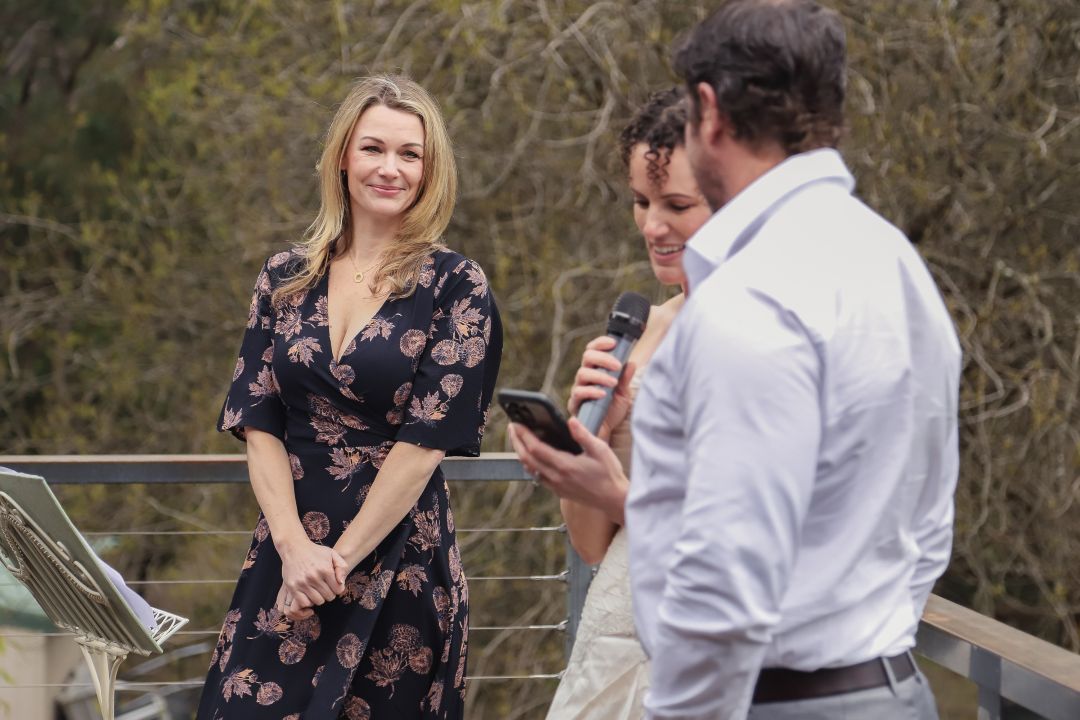
Writing anything from a birthday card to a workplace email can sometimes feel impossible. Staring at an endless piece of blank paper, filled with doubt on where to start or what to even say. And this brain fog can seep in when it comes time to write your own vows. But luckily, there is a celebrant ready to lend helping words. Join Melbourne Wedding & Bride’s Alice O’Brien as she learns the art of creating the perfect ceremonial script from Yarra Valley based celebrant, Michelle Louise Orpe.
Written by Alice O’Brien
The wedding ceremony script typically follows a similar structure, involving familiar sections breaking it up and normally taking place during the processional (the first part of the ceremony). This introductory part is where the
celebrant welcomes everyone and announces the reason why guests are gathered (hint: it’s to witness two people getting married). This is followed by the celebrant asking the couple to declare their intent to marry (the famous ‘I dos’). From here, the exchanging of vows takes place (the most anticipated part) and an exchanging of rings. Then it’s the famous declaration of marriage (let’s all say it together: I now pronounce you …). Winding down the ceremony, the celebrant makes their final remarks as the couple steps into their new shared chapter.
This is a brief overview of the ceremony’s progression, but so long as the legal words are stated, it can take place anywhere, following or branching from the generic structure. The outcome is the same: marriage. But with the couple central to each ceremony, Michelle “doesn’t arrive with a formula [she] arrives with curiosity,” when it comes to creating her ceremonial scripts because it “should feel cinematic.”
Being The Start and End
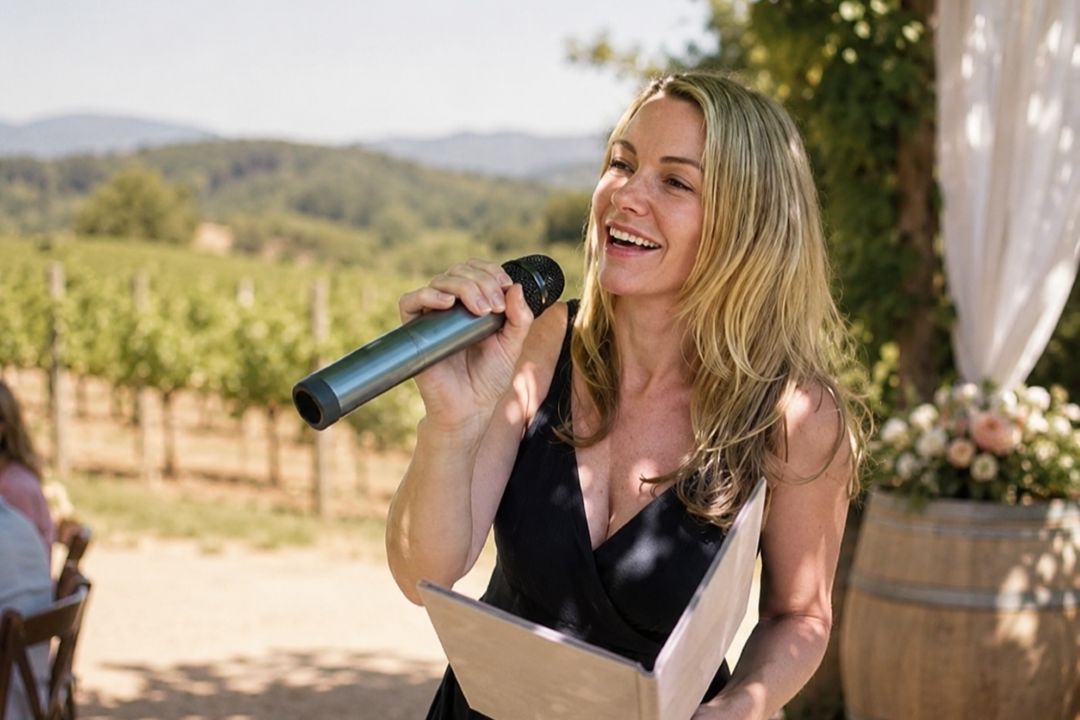
The celebrant holds the role of setting “the entire tone of the ceremony,” Michelle says, and it’s a responsibility she proudly holds.
“They’re the voice your guests hear first, the presence that holds the room and the person responsible for turning everything you’ve planned into something that actually feels the way you imagined,” Michelle says.
The soundtrack to your guest’s anticipation and entering you into married life, mastering the welcoming and parting words within a ceremony script is vital. With an approach similar to a filmmaker tackling a screenplay, Michelle treats writing as a craft. Whether this is due to her broadcasting experience or being an award-winning filmmaker, it’s an approach that works.
“Where many celebrants hand over a template and wish you luck, [my] script is built around the couple: their humour, their history, their way of speaking to each other,” Michelle explains.
The impact of her artful approach is truly shown through testimonies from her couples:
Karen and Kryz: “the writing, the delivery, the presence, everything was seamless.”
Rachel and Brendon: “personal, full of love and humour and wonderful stories.”
Not Just the Celebrant’s Script
Exchanging ceremonial vows is when guests prick their ears, the couple takes a deep breath, and then, in front of everyone they love, they profess their shared commitment. Vows are spoken
promises written by the couple themselves (normally separately, keeping them a surprise). But putting the love that one feels into words, with all of the care and gratefulness, is not easy. Sometimes it can feel that there’s no correct string of words ever truly capable of expressing the depth of how you feel. Instead of letting couples navigate this word field alone, Michelle proudly “offers hands-on coaching to help couples write and deliver personal vows that actually sound like them and not a greeting card.” Script writing for Michelle does not simply end on her own welcoming and closing remarks. Her guidance extends to vow writing, and it’s this approach that sets her apart.
“Almost every couple I work with tells me afterwards that writing their vows was the part they underestimated most … it can feel overwhelming, even terrifying, to put something that big into
words,” Michelle says.
“The vows are the heart of everything … I’ve never seen a room hold its breath the way it does in that moment and I’ve never seen a couple more grateful that they got it right.”
Time To Speak
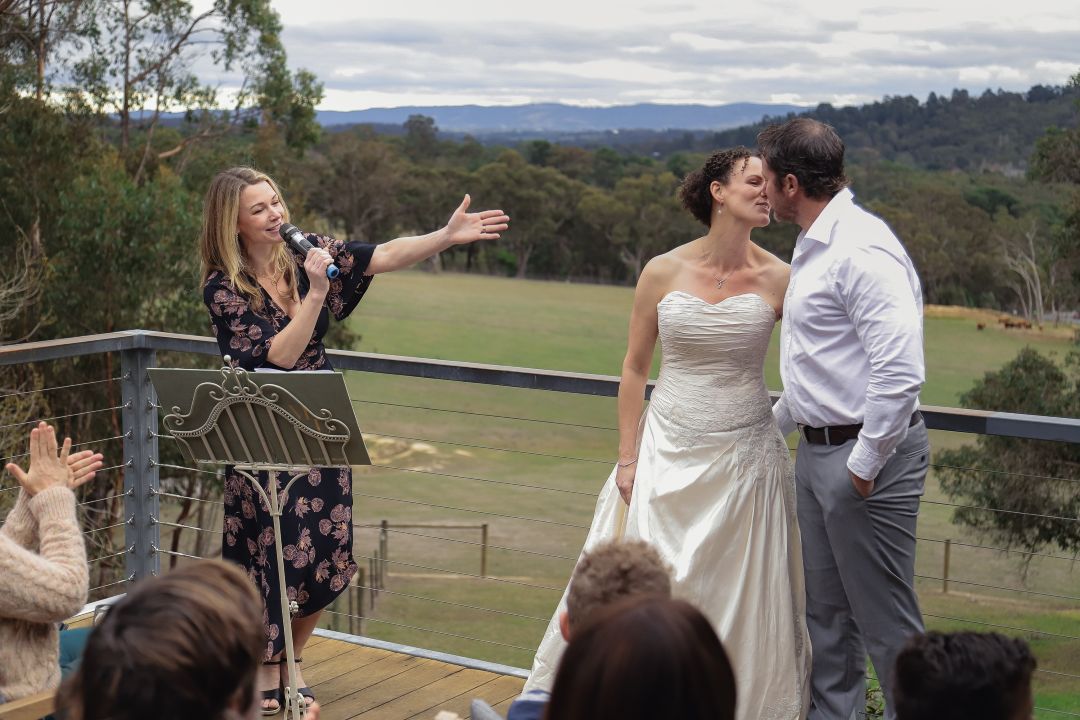
Writing a speech in the comfort of one’s home is completely different from speaking it with confidence during the ceremony. For Michelle, public speaking comes naturally through her experience as a broadcaster dealing with the unpredictability of live television. For others, public speaking causes the mouth to go dry, knees to wobble and sleepless nights. But, in an almost cruel joke, many guests say wedding speeches are their favourite parts; from emotionally charged vows to the best man’s speech filled with fond memories and, of course, the father of the bride saying goodbye to his little girl. Due to the commonality of this fear, Michelles’ approach is not bound to only ceremonial speeches, but to any speech, at any point. For anyone in the wedding party who needs it, Michelle offers a public speaking package specifically designed for wedding day nerves by using the same tools she draws on as a filmmaker and presenter. She brings something rare to the celebrant world by emphasising her approach to wedding scripting and speeches is built on “the instincts of a storyteller, the skills of a broadcaster and the genuine belief that every love story deserves to be told beautifully.”
Photography courtesy of Michelle Louise