With a past background in live television and more than twenty years of broadcast experience, Michelle Louise Orpe brings a rare combination of presence, composure and storytelling to every ceremony she delivers. But how does her past influence her marriage ceremonies? Join Melbourne Wedding & Bride’s Alice O’Brien as she delves into Michelles’ former career in live television, and how lessons learnt help guide her couples through a marriage ceremony.
The celebrant who conducts your wedding ceremony is heavily influenced by their own past. From life lessons to career learnings, all form their deep appreciation of love and desire to be involved in weddings. Their past guides their present-day work as a celebrant, and this is no different for Michelle. She previously worked in live television, from news presenting to participating in and writing TV shows. During this period, Michelle “picked up over 5000 hours of live TV.” Surprisingly, the cross between her worlds of live TV and marriage celebrant work is more than strong; it’s foundational.
“Live television is the ultimate training ground for this kind of work,” Michelle points out.
“You learn very quickly there’s no pause button, you just smile, keep talking and make it look like everything is going exactly to plan.”
In similar vein to a TV set filled with cameras, producers, and the overwhelming pressure and realisation you’re on-air, Michelle says “weddings are basically live events with emotions, weather, small children and alcohol so anything can happen.” Weddings are live, emotional environments where anything can happen, and Michelle holds that space with calm confidence, guiding each moment as it unfolds.
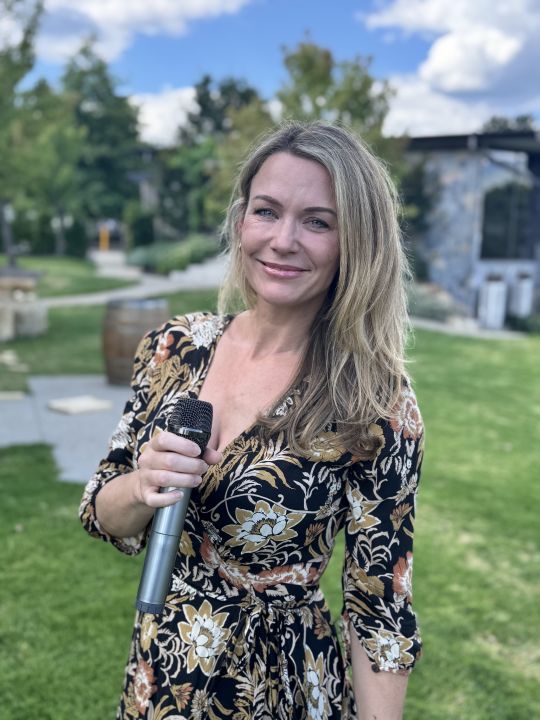
Image courtesy of Michelle Louise.
A Mix Of Nerves And Live TV
Michelle brings her learnings from live TV and shares these little tricks with the couples she works with. An area of worry for many couples is knowing how to deal with nerves stemming from public speaking, the pressure of reading vows, and how to stay calm through those heart racing moments.
“One of my favourites is to imagine you’re a teacher showing a class of students how to do it … fear of public speaking is really your amygdala going into overdrive, warning you there’s imminent danger … but when you’re teaching, you don’t feel judged, you feel in control and that instantly calms the nervous system,” Michelle mentions.
But Michelle offers more than just tips; she offers understanding, as she herself has stood in the uncomfortable feeling of similar nerves. One of the most important things she has picked up from her past career is the role tone, pacing, and projection play in appearing confident and calm when speaking.
“Tone sets the emotional atmosphere straight away … pacing is just as important because ceremonies need space to breathe … projection matters too, not just for volume, but for clarity and confidence,” Michelle explains.
The delivery of a ceremony is how the emotions are truly felt, as you can have a beautifully written script, but if people cannot feel the meaning behind each word spoken aloud, the impact can be lost.
“If a couple is nervous, I also help them shape their vows so they’re easy to deliver aloud, without stumbling or feeling overwhelmed in the moment,” Michelle says.
The TV lessons Michelle brings to her couples doesn’t stop there. This extends into how to appear natural in front of the camera for those all-important wedding shots.
“Slow everything down: walk a little slower, pause a little longer, and take a breath before key moments, it instantly makes you look calmer on camera,” Michelle points out.
Mixing live TV and stepping into the role of a marriage celebrant turns out to be the perfectly balanced blend of past learnings and future teachings. Michelle uses her past to help couples through their ceremony, marking the start of their future together.
Secrets Behind Writing
Despite knowing how best to handle wedding nerves on the day, if the creation of the ceremony script is done on a solid foundation, this too will play a role in calming nerves.
“The key is authenticity … I use the couple’s real story, their own words and their natural personalities,” Michelle explains.
If a couple is confident in how their ceremony will sound, look and feel, then nerves can be reduced solely by this knowledge, for Michelle it’s “why [she] makes it a priority to educate and guide [her] couples through the process.” This priority also stems from her own wedding ceremony experience. While becoming a marriage celebrant, Michelle learnt there’s only a handful of things a celebrant needs to say and do to legalise a marriage, the rest is up to the couple, and Michelle “wishes [she] had known that when [she] got married … it could have been so much more personal and memorable.”
“You could dress as astronauts, include a tango, jump out of a plane, write your own vows, involve your children, or create something that feels totally unique to your relationship … the world really is your oyster,” Michelle ends on.
Your ceremony is a sacred part of your wedding day, and whomever your celebrant will be plays an incredibly important role. Your celebrant is more than the third party at the alter announcing you’re married. They’ll become a guiding hand in how to manage nerves, speak from the heart and take away the added pressure of wedding day chaos. Michelle’s approach ensures each ceremony feels considered, engaging and genuinely reflective of the couple at its heart, setting the tone for the celebration that follows.